Young Peanut Farmers Look Ahead: Building the Next Generation of Agriculture

Joy Crosby2026 ConferenceLeave a Comment

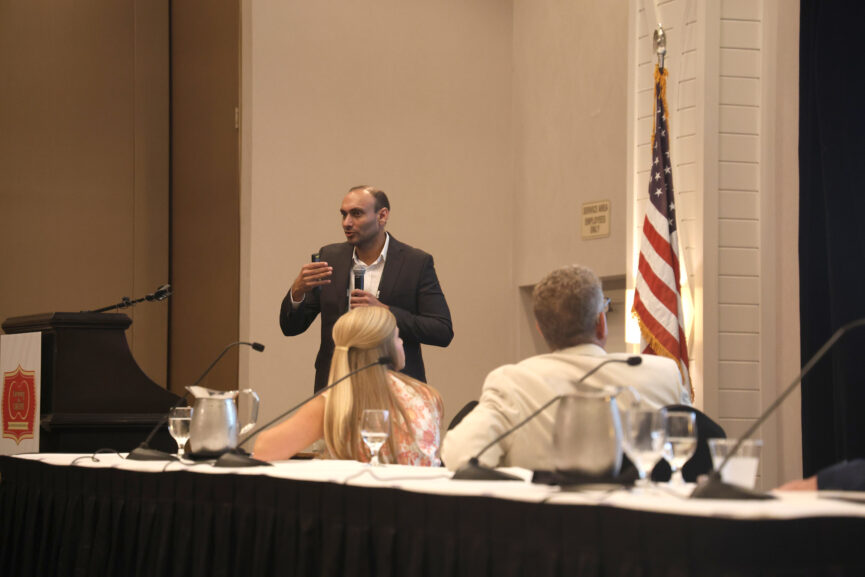
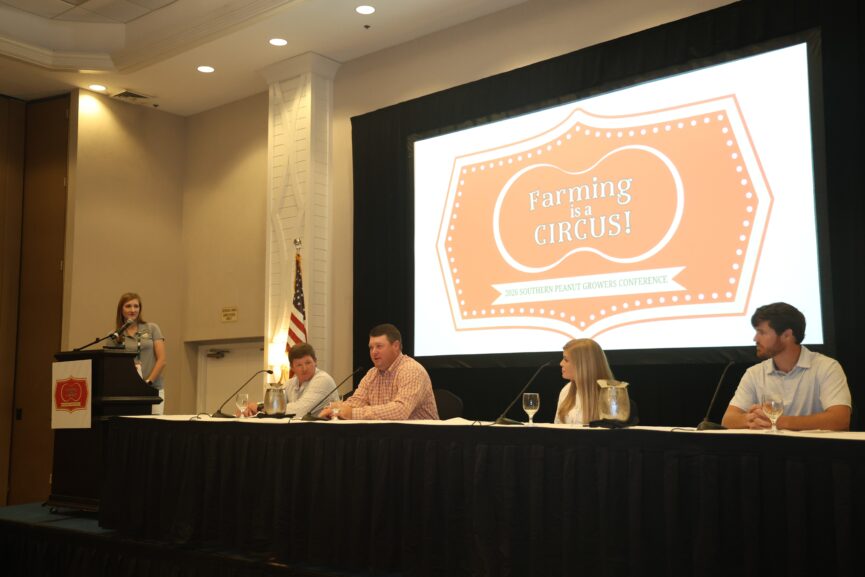
For four young producers participating in the Peanut Leadership Academy, farming is more than a career—it is a commitment to building something that can be passed on to the next generation. During a young peanut producers panel at the Southern Peanut Growers Conference, Garrett Moore of Alabama, Jeffrey Pittman of Florida, Mary Katherine Harrington of South Carolina and Adam Curls of Georgia, shared candid perspectives on the challenges and opportunities facing young farmers today.

Establishing a farming operation can be difficult, particularly when young producers are trying to secure financing, access land and build relationships with lenders and suppliers. Moore began farming with just 13 acres and has grown his operation to about 2,200 acres while diversifying into poultry and cattle. Others described gradually adding acreage and earning the confidence of lenders by demonstrating their ability to manage risk and produce a crop.

The panelists also discussed lessons that have changed the way they grow peanuts. Variety selection, planting timing, irrigation, GPS and equipment investments have all played important roles. Irrigation was highlighted as a valuable long-term investment because it helps reduce weather-related risk, while equipment such as semi trailers, flex plows and reliable sprayers can improve efficiency and harvest management.

Looking ahead, the producers see significant potential in technology, particularly artificial intelligence, drones, precision agriculture and yield monitoring. However, they emphasized that technology should be viewed as a tool rather than a replacement for a farmer’s experience and judgment.

Managing profitability remains one of the biggest concerns. Rising input costs, labor shortages, high land values and access to capital are putting pressure on young producers. The panelists stressed careful budgeting, maintaining manageable debt, using crop insurance to manage risk and being cautious about major investments.

Succession planning was another important theme. Whether returning to a multigenerational family farm or building an operation from the ground up, the producers recognized the importance of preparing for the future and ensuring farms can remain viable for the next generation.

Perhaps the strongest message from the panel was that young farmers cannot succeed alone. Relationships with lenders, landlords, agricultural suppliers, Extension personnel and fellow farmers are essential. For those considering a return to the farm, the panelists encouraged learning from experienced producers, earning their place in the operation, getting involved, maintaining faith and being willing to take opportunities.

As one panelist put it, agriculture must become both profitable and appealing to attract the next generation. The future of peanut farming will depend on young producers who are willing to learn, adapt, manage risk and continue building on the foundation left by those who farmed before them.
 

2026 Southern Peanut Growers Conference photo album

Peanut Industry Priorities Take Center Stage in Washington

Joy Crosby2026 ConferenceLeave a Comment

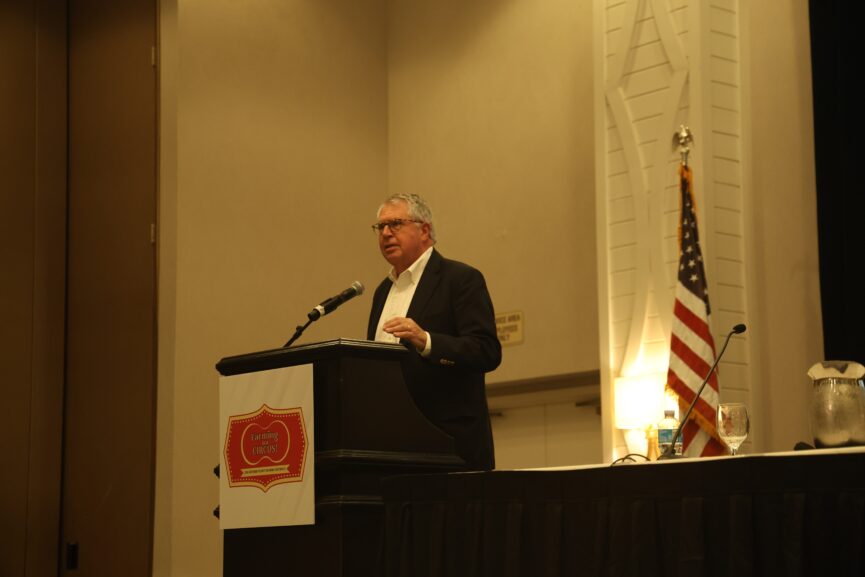
During the third general session of the Southern Peanut Growers Conference, Bob Redding of The Redding Firm, provided an inside look at the issues shaping federal agricultural policy, discussed the latest developments in Washington and their potential impact on peanut farmers.

Redding highlighted the significance of provisions included in the One Big Beautiful Bill, including increased peanut reference prices, higher marketing loan rates, expanded payment limits and 30 million new base acres nationwide. These changes, which extend through 2031, represent important gains for producers, but the speaker emphasized that continued engagement will be necessary as Congress considers future legislation.

Economic assistance remains another major focus. The peanut industry worked with congressional leaders to ensure peanuts were included fairly in assistance programs, particularly after concerns that existing formulas did not adequately reflect the economic challenges facing peanut producers. Additional assistance under consideration could include funding for both disaster relief and economic losses, although the amount available and its impact on peanut payments remained uncertain.

Research and nutrition were also identified as priorities. The peanut industry has secured more than $20 million in new funding for aflatoxin research, along with $9 million for nutrition research. The presentation also highlighted growing interest in “food is medicine” initiatives and the importance of ensuring peanuts remain part of conversations surrounding healthy foods and nutrition.

Trade remains a key concern, particularly the continued review of the U.S.-Mexico-Canada Agreement and market access in the European Union. The industry supports maintaining strong trade relationships with Mexico and Canada while working to address challenges affecting U.S. peanut exports to Europe.

The speaker also stressed the importance of H-2A reform and protecting the federal research and promotion checkoff programs. With several major policy issues still developing, the message to peanut producers was clear: stay engaged, stay informed and continue making the industry’s voice heard in Washington.


2026 Southern Peanut Growers Conference photo album

USDA FSA Updates Offer New Opportunities for Peanut Producers

Joy Crosby2026 ConferenceLeave a Comment

William “Bill” Beam, administrator with the USDA Farm Service Agency (FSA) outlined several provisions at the Southern Peanut Growers Conference that could provide additional support and flexibility for peanut producers. Beam highlighted changes involving base acres, reference prices, payment limits, Marketing Assistance Loans and the agency’s efforts to modernize its record keeping systems.

One significant change is the addition of 30 million new base acres nationwide through the One Big Beautiful Bill (OBBBA). The additional base acres are intended to provide support to farms that previously did not have base acres. Landowners were notified of their potential allocations, which were based on plantings from 2019 through 2023.

Beam also discussed increased reference prices. Peanut reference prices increased from $536 per ton to $630 per ton, providing additional support under the farm programs. The higher reference price applies to the 2025 crop year, with payments beginning in fall 2026.

Payment limitations have also increased, moving from $125,000 to $155,000, with future adjustments tied to inflation. Beam noted that changes involving pass-through entities, including LLCs and S corporations, may allow eligible actively engaged partners to qualify for additional payment limits, although he cautioned producers to consider the broader implications of any entity changes.

For peanut growers, another important provision is the reauthorization of Marketing Assistance Loans (MALs) and Loan Deficiency Payments through 2031. The peanut loan rate increases to $390 per ton, providing additional operating capital while producers hold their crop for sale.

Beam also highlighted FSA’s “One Farmer, One File” initiative, which is designed to modernize acreage reporting and reduce paperwork. A new geospatial mapping system will allow producers to identify fields and crops electronically, with future phases expected to allow remote reporting and eventually pre-filled acreage reports using precision agriculture data.

The goal, Beam said, is to reduce administrative busywork while allowing FSA employees to spend more time working directly with farmers.


2026 Southern Peanut Growers Conference photo album


Farm Press Peanut Efficiency Award Winners

Joy Crosby2026 ConferenceLeave a Comment

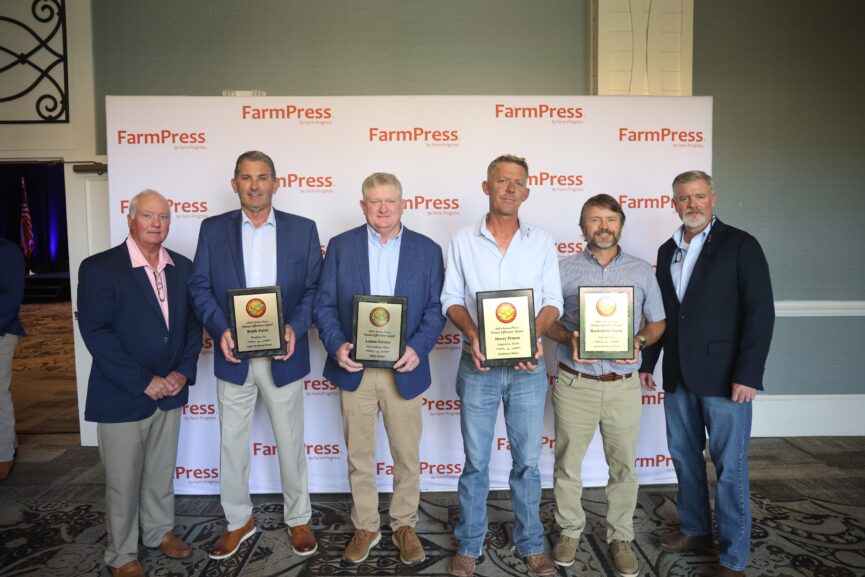
Top peanut producers are recognized for their ingenuity, sustainability and high yields as the 2026 Farm Press Peanut Efficiency Award winners during the Southern Peanut Growers Conference.

The 27th Class of PEA winners are:
Upper Southeast – Babb Farm, Windsor, Va.
Lower Southeast – Barksdale Farm, Sylvester, Ga.
Delta – Lonnie Fortner, Port Gibson, Miss.
Southwest – Henry Froese, Seagraves, Texas

The Peanut Efficiency Award is based on production proficiency, honoring growers who produce the highest yields by using inputs wisely and effectively. The awards are presented based on a producer’s entire farm operation and not on individual farms or small plots.

A second major component of the Peanut Efficiency Award is education. Southeast Farm Press, Delta Farm Press and Southwest Farm Press support the education element by publishing articles throughout the year focusing on peanut production efficiency.

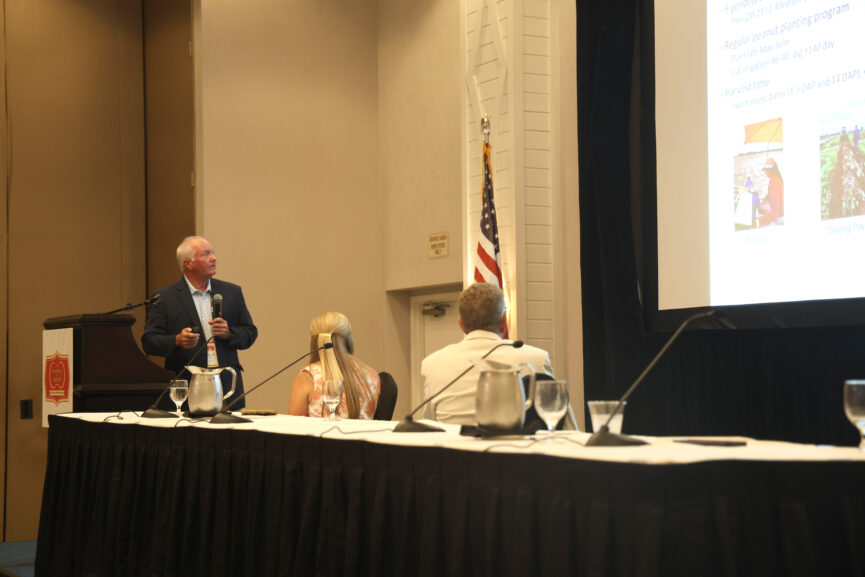
Dr. Marshall Lamb, director of the USDA National Peanut Research Laboratory, is the lead advisor for the program and works with the program’s advisory board made up of Extension peanut specialists, county agents, association staff members and economists to bring an outstanding array of nominations each year.

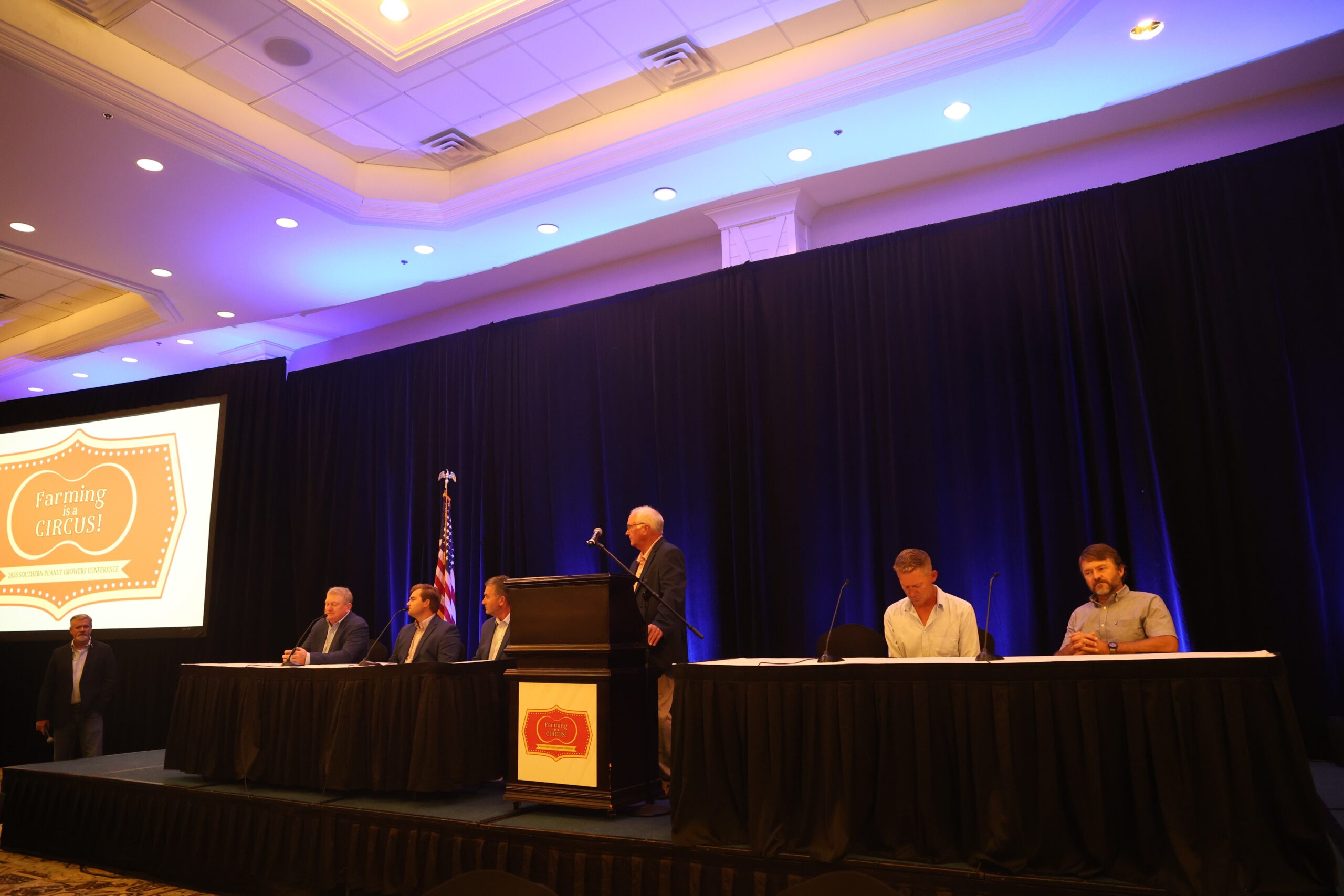
The winners joined Dr. Marshall Lamb on stage to take questions from peanut growers eager to get some tips on improving efficiency on the farm.


2026 Southern Peanut Growers Conference photo album

Building Resilience in Agriculture

Joy Crosby2026 ConferenceLeave a Comment

During the Southern Peanut Growers Conference luncheon, Marshal Sewell of Mind Your Melon, delivered a powerful and deeply personal message on mental health in agriculture. Drawing from his experience as part of a fifth-generation fruit and vegetable farming family in Plant City, Florida, Sewell connected the pride of agricultural heritage with the pressures and uncertainties that come with carrying on a family operation.

Sewell shared the story of losing his father to suicide during his senior year of high school, following a devastating crop failure that left the family facing significant financial and emotional challenges. He emphasized that mental health is not synonymous with mental illness and that everyone faces mental health challenges at some point. For farming families, those challenges can be compounded by financial pressures, unpredictable weather, markets, regulations, family responsibilities and the weight of maintaining a family legacy.

Rather than focusing solely on crisis intervention, Sewell encouraged farmers to build resilience before reaching a breaking point. He highlighted three characteristics of resilience, or “hardiness”: commitment, challenge and control. Finding purpose, viewing challenges as opportunities to learn and grow, and focusing on the things within our control can help individuals better navigate difficult seasons.

Sewell also encouraged farmers to identify their “oh no people,” trusted individuals they can call when something goes wrong and they need help. Just as importantly, he challenged attendees to be that person for someone else by moving beyond surface-level conversations and being willing to talk about difficult subjects.

His final message was one of hope. Every day provides an opportunity for things to improve, he said, and hope involves more than wishful thinking. It comes from having goals, developing pathways to reach those goals and recognizing that we have agency in the actions we take.

Through Mind Your Melon, Sewell and his wife, Taylor, are working to bring mental health conversations out of the shadows and provide resources for those working in agriculture.

2026 Southern Peanut Growers Conference photo album

From 2,600 to 4,000 Pounds: The Research Behind Peanut Yield Gains

Joy Crosby2026 ConferenceLeave a Comment

For decades, peanut research has helped transform U.S. peanut production, with average yields increasing from about 2,600 pounds per acre in the 1990s to roughly 4,000 pounds—or two tons—per acre since 2012. Dr. Marshall Lamb, research leader at the U.S. Department of Agriculture’s National Peanut Research Laboratory, says that progress is the result of collaboration among universities, Extension, private industry and farmers adopting new technologies and management practices.

Looking ahead, genetics could play an important role in the next jump in productivity. Researchers are tapping the U.S. peanut germplasm collection in Griffin, Georgia, to identify traits such as drought tolerance, disease resistance, nematode resistance and aflatoxin resistance. Promising drought-tolerant lines are already being evaluated and increased in the winter nursery in Puerto Rico, helping move improved genetics through breeding programs more quickly.

Research also continues to provide practical tools for growers. Irrigation studies show that soil-moisture sensors and Irrigator Pro can help farmers apply less water while maintaining or improving yields compared with traditional irrigation scheduling. In several studies, substantially less water produced comparable or higher yields, demonstrating the potential for improved water-use efficiency and profitability.

Planting date and crop rotation are other areas where research can help reduce risk and improve yields. Earlier planting of dryland peanuts can better align peak crop water demand with rainfall, while rotating peanuts with cotton and corn has produced significant yield increases compared with continuous peanuts.

Researchers are also looking beyond the field, studying peanut quality from harvest through storage, shelling and manufacturing. Overall, the research community remains optimistic that advances in genetics, crop protection, water management and production practices will help the peanut industry reach another significant yield plateau in the years ahead.


2026 Southern Peanut Growers Conference photo album

Technology Helps Peanut Farmers Adapt to Weather Challenges

Joy Crosby2026 ConferenceLeave a Comment

Weather remains one of the biggest variables in peanut production, affecting everything from planting through harvest. While farmers cannot control the weather, advances in precision agriculture, artificial intelligence and data technology are providing new ways to better anticipate conditions, respond to challenges and make more timely management decisions.

During General Session 1, Simer Virk, extension specialist in Precision Agriculture and Machinery Systems at Auburn University, explained how growers can use increasingly localized weather information, soil-moisture data and other precision-agriculture tools to turn weather from simply a production risk into a management tool. A key message from Virk is that measuring conditions accurately is the first step toward making better decisions. Combining field-specific weather information with soil moisture, crop conditions and other data can help farmers determine when to irrigate and how much water to apply.

Several emerging technologies could further help farmers manage narrow planting and spraying windows. Sensors capable of measuring soil moisture and temperature at planting could help ensure seeds are placed into favorable conditions. Faster, more precise seed meters could allow growers to cover more acres when planting opportunities are limited. Weather-connected sprayers could eventually adjust or stop applications when conditions such as wind are unfavorable.

Spray drones are already providing another option, allowing timely pesticide applications when wet conditions prevent conventional equipment from entering fields. Satellite imagery, artificial intelligence and crop-sensing technologies also offer opportunities to identify field variability and develop more proactive management strategies.

Harvest technology is advancing as well. Peanut yield monitoring, moisture sensing and future automation could help growers make better harvest decisions and ultimately provide valuable data for improving crop management.

Virk concludes that having information is only part of the equation. The real value comes from turning accurate, local weather and crop data into simple, timely and actionable decisions. As technology becomes more user-friendly and connected, farmers who learn to effectively use these tools may be better positioned to manage weather variability and improve production efficiency.


2026 Southern Peanut Growers Conference photo album

Historic Drought Gives Way to Strong El Niño: What It Means for the Southeast

Joy Crosby2026 ConferenceLeave a Comment

The Southeast experienced one of its most significant droughts in recent history during the winter and spring, with South Georgia and North Florida among the hardest-hit areas. During General Session 1, David Zierden, state climatologist with Florida State University, examined the causes of the drought, its impacts and what the transition to a strong El Niño could mean for the months ahead.

The drought developed rapidly, moving from relatively dry conditions in the fall to extreme and exceptional drought by early spring. Some areas experienced rainfall deficits of 8 to 17 inches, with portions of South Georgia, North Florida, Alabama and the Carolinas recording their driest winter on record. The lack of tropical systems during the previous hurricane season, combined with La Niña conditions in the Pacific, contributed significantly to the dryness.

The drought affected rivers, streams, groundwater and wildfire activity throughout the region. While recent rainfall has brought significant improvement, portions of Florida and the Carolinas continue to experience drought conditions.

Looking ahead, the weather pattern has shifted dramatically. A strong El Niño has developed in the tropical Pacific and is expected to persist through winter and into spring. Historically, El Niño brings more frequent storms and above-normal rainfall to the Southeast, along with generally cooler temperatures. Zierden emphasized that the strength of this El Niño increases confidence in that forecast, although it does not necessarily mean rainfall will be greater than during every other El Niño event.

El Niño also typically suppresses Atlantic hurricane activity, although warmer ocean temperatures associated with climate change continue to increase the potential for rapid hurricane intensification.

Zierden also addressed weather-modification myths, explaining the limited role of cloud seeding and debunking claims about chemtrails, weather radar and technology steering hurricanes.


2026 Southern Peanut Growers Conference photo album

Strength, Health and Well-Being: Taking Care of the People Behind the Farm

Joy Crosby2026 ConferenceLeave a Comment

The opening general session of the 2026 Southern Peanut Growers Conference focused on an often-overlooked part of farm management: the health and well-being of the people who keep agricultural operations running. University of Georgia public health experts Dr. Stephen Correia, Dr. Jenay Beer and Dr. Christina Proctor discussed cognitive health, caregiving, stress management and practical ways farmers can protect their physical and emotional health.

Correia, a clinical neuropsychologist with UGA’s CARE Center, began by addressing one of the biggest concerns associated with aging—dementia. He emphasized that dementia is not a normal part of aging and explained that Alzheimer’s disease accounts for approximately 60% to 80% of dementia cases. Georgia faces a particularly significant challenge, ranking among states with high rates of Alzheimer’s disease and having a large rural population. The state also relies heavily on family members to provide care, creating significant emotional and financial costs.

While some risk factors for dementia cannot be changed, Correia stressed that research indicates nearly 45% of Alzheimer’s disease cases may be delayed or prevented through modifiable risk factors. Farmers can protect brain health by controlling blood pressure, diabetes and cholesterol; avoiding smoking and excessive alcohol use; staying physically active; maintaining a healthy diet; preventing head injuries; treating depression; addressing hearing and vision loss; and remaining socially and intellectually engaged. Continuing to learn, try new activities and maintain strong social connections can help build cognitive reserve and support healthy aging.

Beer shifted the discussion to caregiving, an issue particularly relevant to farm families. She shared her own family’s experience with dementia and asked attendees how many had been affected by the disease or were currently serving as caregivers. Many hands went up, illustrating how widespread caregiving is in rural communities.

A 2026 study of 700 farming families found that 99% reported providing some form of caregiving, while 60% were caring for both children and older adults. Caregiving can consume significant time and create financial strain, particularly when time away from farm work is required. Yet Beer noted that farm families often view caregiving not as a burden but as an honor and responsibility rooted in strong family values. Even when caregiving is meaningful, however, it can still be stressful and may cause caregivers to neglect their own health.

Proctor focused on stress and mental health among farmers. Agriculture combines numerous stressors, including financial pressures, weather, labor shortages, physical demands, market uncertainty, isolation and occupational hazards. Many of these factors are outside a farmer’s control, creating what researchers call “stressor pileup.” Proctor emphasized that farmers should concentrate on the areas they can control, particularly their coping strategies.

Healthy coping mechanisms include spending time with family and friends, maintaining faith and peer support, pursuing hobbies such as hunting, fishing or exercise, taking short breaks from farm responsibilities and planning time away from the farm. In contrast, social isolation and self-soothing through alcohol, drugs, gambling or excessive spending can create additional problems.

The session’s central message was simple: Farmers are stewards of their land, families and communities—but they must also be stewards of themselves. Protecting physical health, maintaining brain health, building support networks and taking time to manage stress can help farmers remain healthy and productive while strengthening the families and operations that depend on them.


2026 Southern Peanut Growers Conference photo album


2026 Valor Award Presented to Don Koehler

Joy Crosby2026 ConferenceLeave a Comment

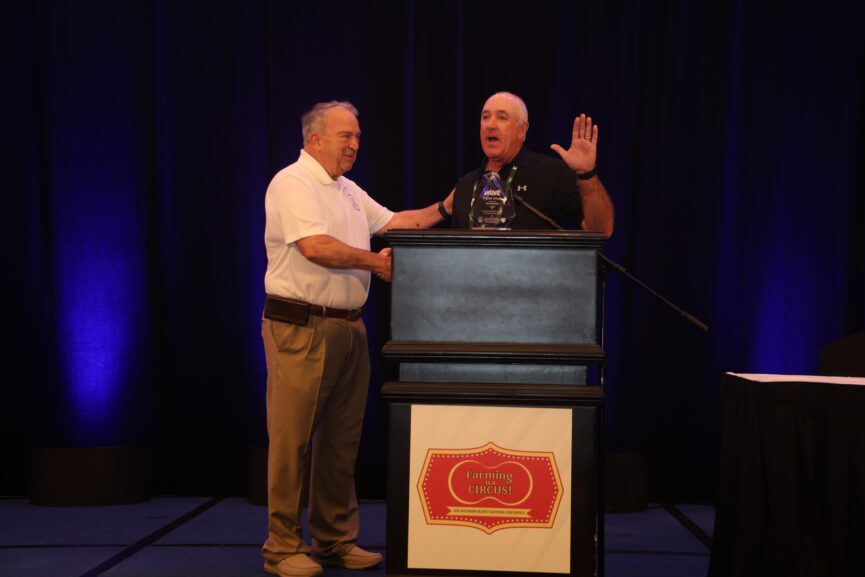
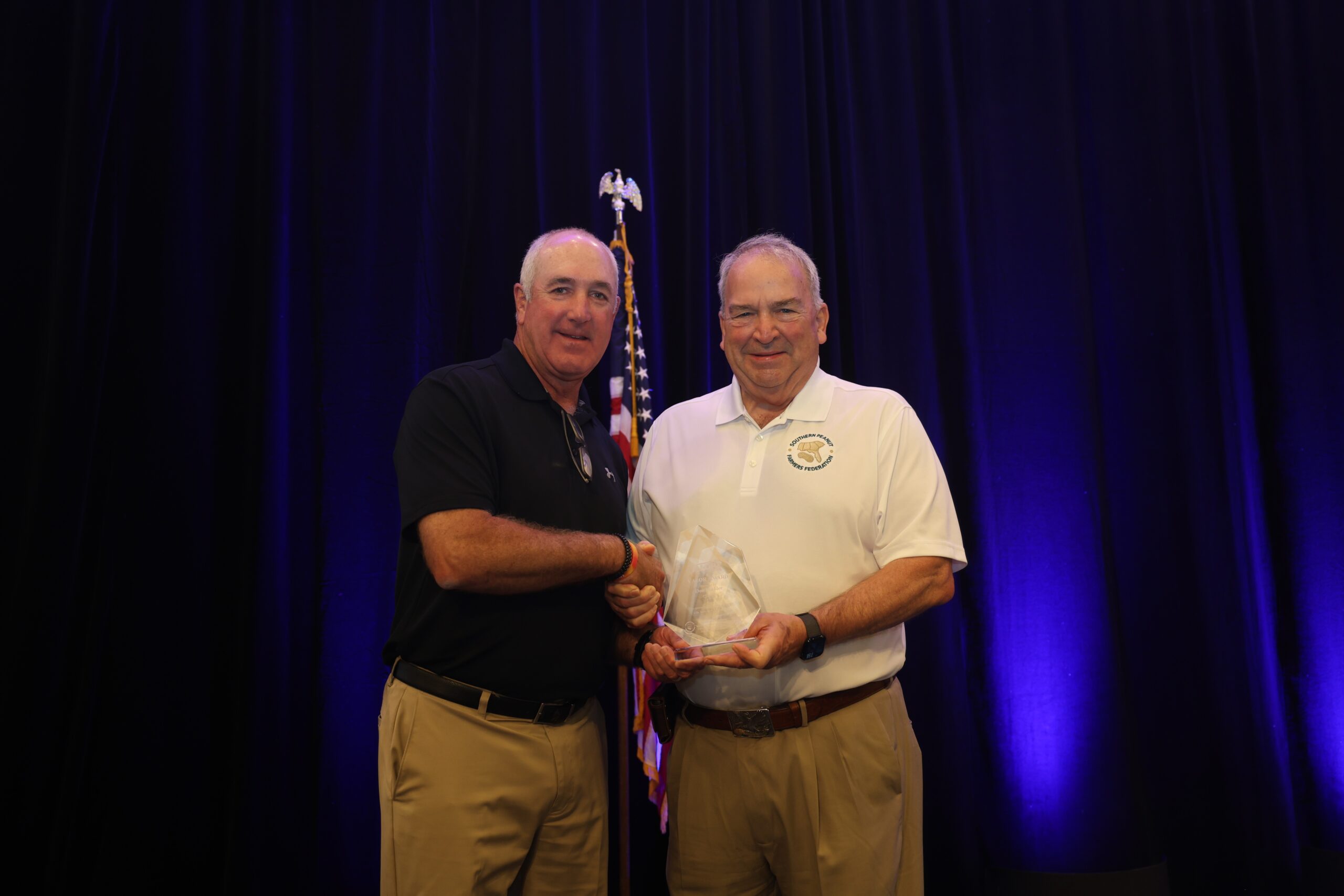
The 2026 Valor Award was presented to Don Koehler, retired executive director of the Georgia Peanut Commission. John Altom with Valent presented the award and explained that the winners each year are selected because they model the definition of Valor, which means “great courage in the face of danger, especially in battle.”

Don has served as executive director of the Georgia Peanut Commission since 1986 and was appointed to senior executive director in 2026. He serves on the management team of the Southern Peanut Growers, the Southern Peanut Farmers Federation and member of the Executive Committee of the U.S. Peanut Federation. He is currently serving his ninth term as a member and currently Chairman of the Agricultural Technical Advisory Committee, which advises USDA and the U.S. Trade Representative on trade policy issues.

His contributions have included leadership in agricultural policy, international trade, Farm Bill development, export promotion, and grower advocacy. Koehler has also served on the APC Board of Directors and chaired APC’s Peanut Butter for the Hungry Task Force.

Don and his wife, Cheryl, reside in Tifton, GA where they are members of First Baptist Church. They have one son in heaven, one son who lives in Tifton, three grandsons and one granddaughter.

Congratulations to Don Koehler.

2026 Southern Peanut Growers Conference photo album