
Weather remains one of the biggest variables in peanut production, affecting everything from planting through harvest. While farmers cannot control the weather, advances in precision agriculture, artificial intelligence and data technology are providing new ways to better anticipate conditions, respond to challenges and make more timely management decisions.
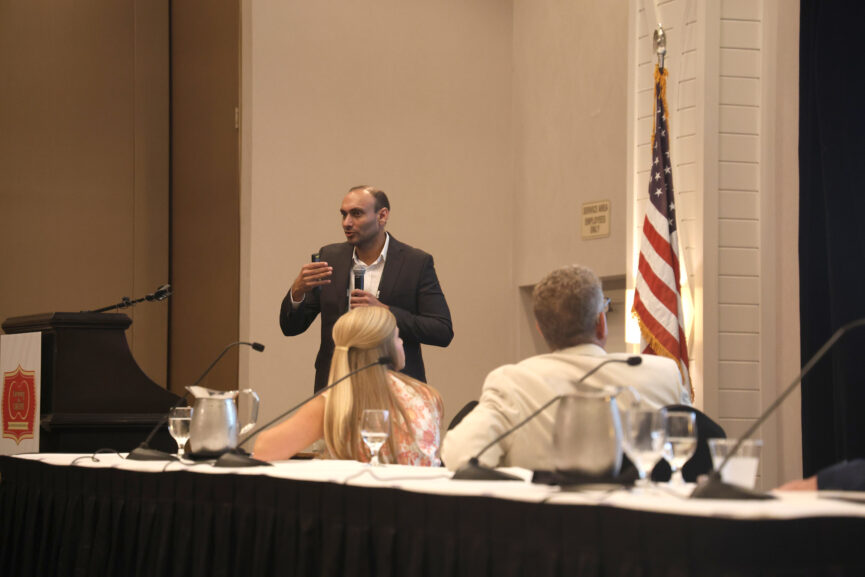
During General Session 1, Simer Virk, extension specialist in Precision Agriculture and Machinery Systems at Auburn University, explained how growers can use increasingly localized weather information, soil-moisture data and other precision-agriculture tools to turn weather from simply a production risk into a management tool. A key message from Virk is that measuring conditions accurately is the first step toward making better decisions. Combining field-specific weather information with soil moisture, crop conditions and other data can help farmers determine when to irrigate and how much water to apply.
Several emerging technologies could further help farmers manage narrow planting and spraying windows. Sensors capable of measuring soil moisture and temperature at planting could help ensure seeds are placed into favorable conditions. Faster, more precise seed meters could allow growers to cover more acres when planting opportunities are limited. Weather-connected sprayers could eventually adjust or stop applications when conditions such as wind are unfavorable.
Spray drones are already providing another option, allowing timely pesticide applications when wet conditions prevent conventional equipment from entering fields. Satellite imagery, artificial intelligence and crop-sensing technologies also offer opportunities to identify field variability and develop more proactive management strategies.
Harvest technology is advancing as well. Peanut yield monitoring, moisture sensing and future automation could help growers make better harvest decisions and ultimately provide valuable data for improving crop management.
Virk concludes that having information is only part of the equation. The real value comes from turning accurate, local weather and crop data into simple, timely and actionable decisions. As technology becomes more user-friendly and connected, farmers who learn to effectively use these tools may be better positioned to manage weather variability and improve production efficiency.